AGRICULTURE
Self-sufficiency
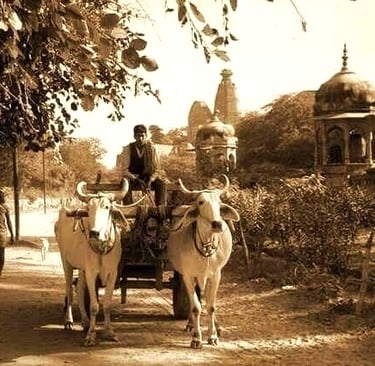
Srila Prabhupada stressed the importance of self-sufficiency and food security. He wanted that the devotees become independant from the materialists and produce our own unadulterated foods. That we purchase land and keep cows to solve our economic problem. Essentially, three things are required, land, cows and man, centered around devotion to Lord Krishna.
Self-sufficiency won't happen overnight, it will require co-operation between ourselves and working in harmony with our land and cows. The soil will require nutrients because without good soil we'll never derive good nutritious foods to develop the mind. As discussed in the chapter on water, good mineral rich water will nourish the vital force or prāṇa, cows and soil included. By the performance of Agnihotra daily we can purify our water and soil, and ultimately derive good nutritious crops. The health and happiness of our cows will also play a significant role in us achieving self-sufficiency.
The whole point of becoming self-sufficient is to become independent of the 'nuts and bolts' industry. Not that we'll claim to be self-sufficient, yet still be dependent on begging donations in the name of 'cow protection'. Sure, if someone has the capacity to assist financially we'll accept. In the initial phases it will be required, but ultimatetly we will stop this dependency on cash. We want to demonstrating practically to the world that Daiva Varnashram Dharma is a perfect system to live by and that we can solve all our economic problems by keeping and protecting our cows.
"How they were happy, the inhabitants of Vrndavana with Krsna and living and cows. That I want to introduce. At any cost do it and... Don't bother about big, big buildings. It is not required. Useless waste of time. Produce. Make the whole field green. See that.
Then whole economic question solved. Then you eat sumptuous. Eat sumptuously. The animal is happy. The animal even does not give milk; let them eat and pass stool and urine. That is welcome. After all, eating, they will pass stool. So that is beneficial, not that simply milk is beneficial. Even the stool is beneficial.
Therefore I am asking so much here and..., "Farm, farm, farm, farm." That is not my program -- Krsna's program. Annad bhavanti bhutani [Bg. 3.14]. Produce greenness everywhere, everywhere. Vrndavana. It is not this motorcar civilization."
Produce greenness everywhere
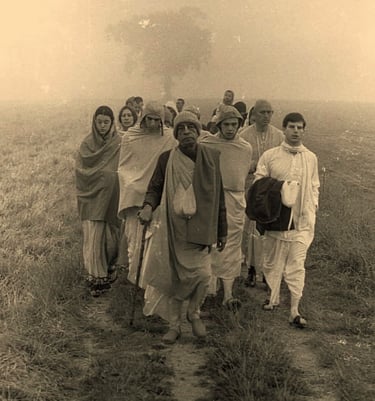
"Our farm projects are an extremely important part of our movement. We must become self-sufficient by growing our own grains and producing our own milk, then there will be no question of poverty. So develop these farm communities as far as possible."
"I want that Mayapur be self-sufficient by having its own production of grains, vegetables, fruits and milk products etc., to the extent that you will be able to feed at least 500 men daily. This will be better than trying to arrange for maintenance funds to come from outside."

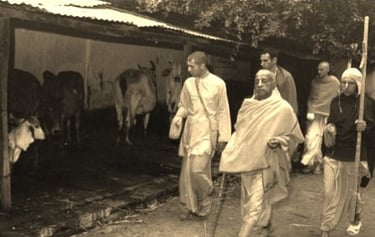
Room conversation, Srila Prabhupada, May 1977, Vrindavana
Letter to Rupanuga, 18 Dec 1974, Mumbai
Letter to TKG, JPS, 10 Feb 1973, Melbourne
"If these farms become successful, then the whole world will be enveloped by Krishna consciousness."
Letter to Hari Sauri, 10 Aug 1977, Vrindavana
Self-sufficient, no question of poverty
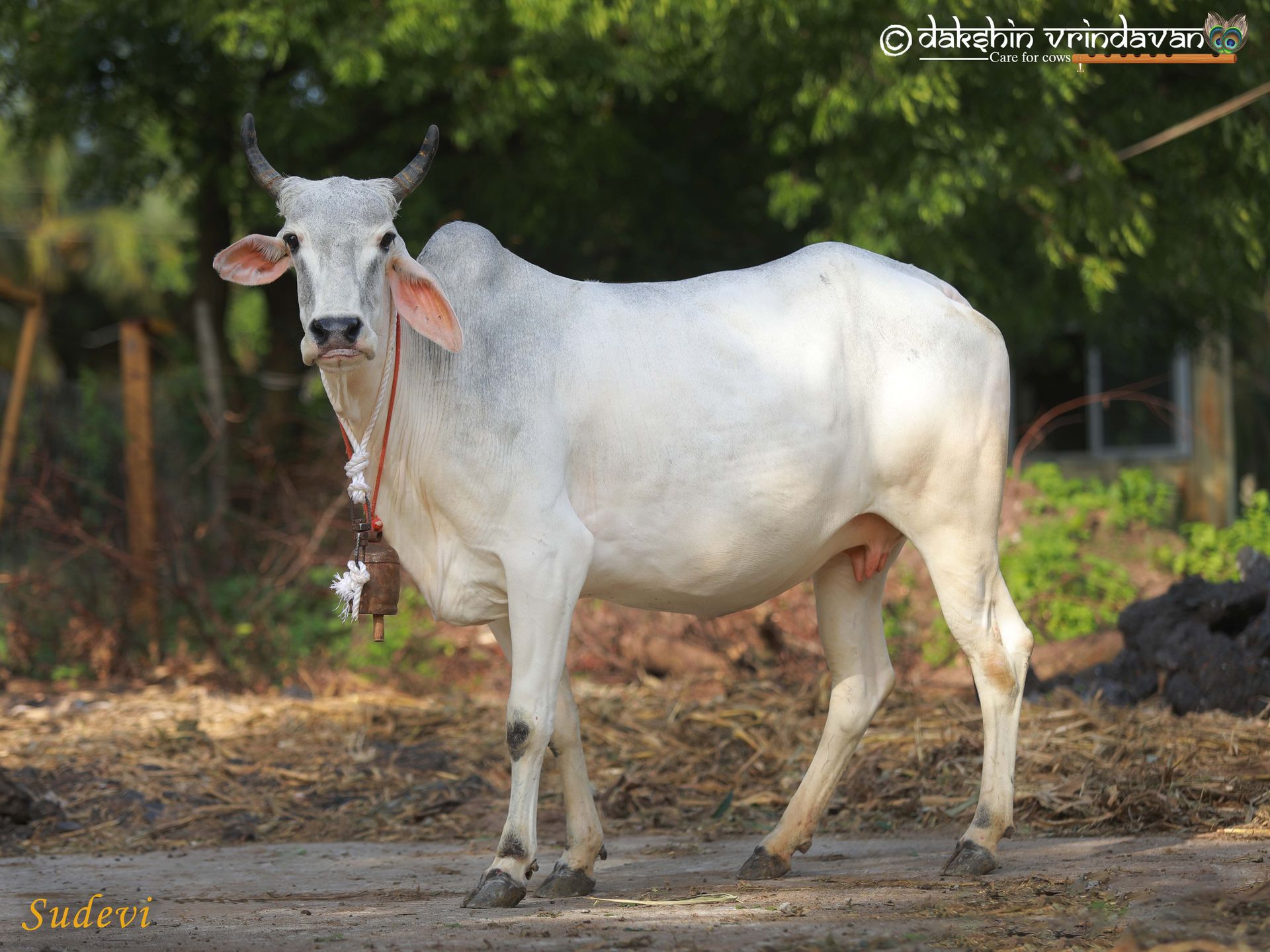
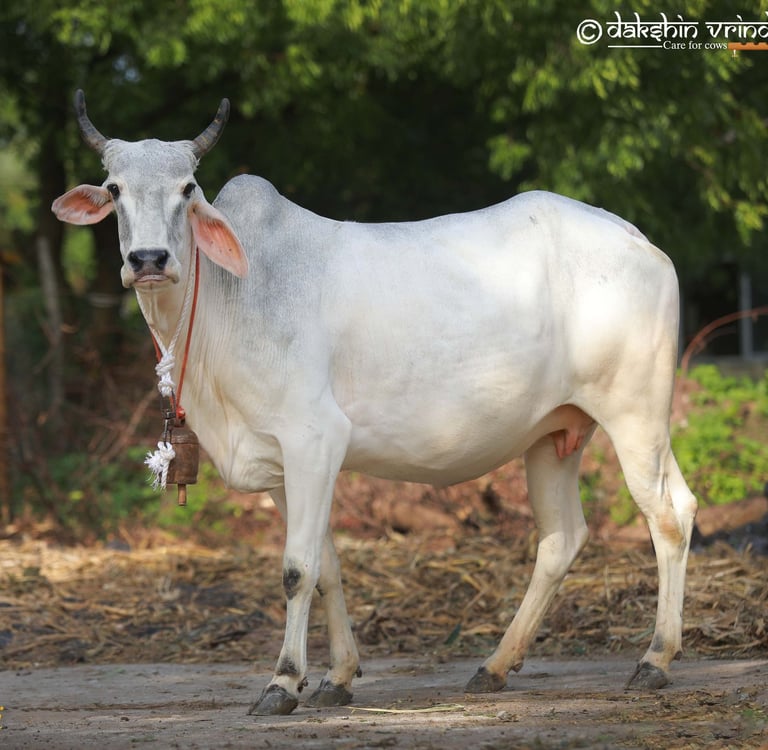
Cows are not mere whimsical animals, they are the deity of the Earth, Kamadhenu, endowed with many great qualities and should be treated with respect. Earth and cows are one and the same, a single cow can revive the entire Earth. When cows roam on the Earth, Earth detects their mood and reciprocates accordingly. The hooves of happy cows treading the surface of the Earth is as if they are massaging the Earth, and when the Earth is pleasured, ground water is encouraged to the surface and life begins to thrive.
The importance of cows in agriculture
Our proposed pilot farm will be approximately 60 acres of rural land in South India. This pilot project will be our initial "Micro Community Project". Once it is fully functional, we will select the best candidates we have trained, to further duplicate this project, in India and abroad as our "Macro Community Project. We intend to accomodate atleast 100 residents. The Resident Devotees will themselves be residing on the land and training will be conducted within close proximity on the same land. A portion will be allocated to housing, temple and various structures for training. Another portion will be allocated to the goshalas. The rest will be set aside for agricultural and dams. The agricultural land will comprise of various crops for devotees, fodder for the cows and rotational grazing fields.
Varnashram = Farms = Cows

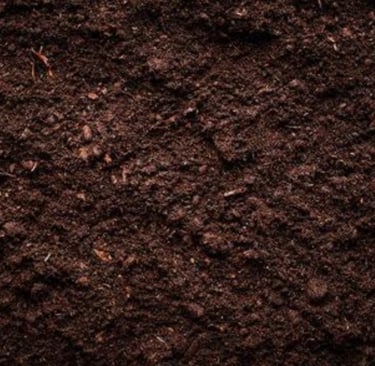
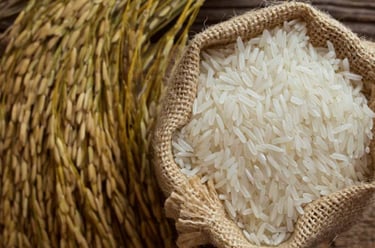
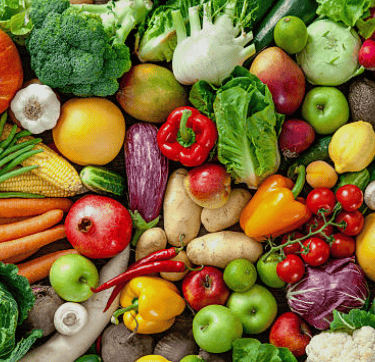




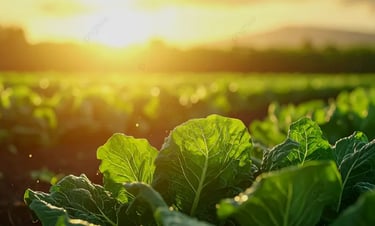
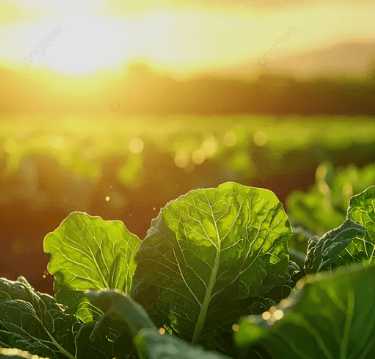


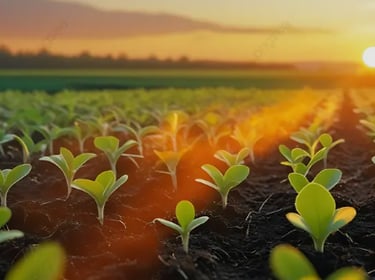
Our approach to agriculture will always be strictly the vedic one. The whole purpose of developing this Vedic Varnashram community is to display to the world the various Vedic systems functioning in its entirety. Part of that is to show case to the world the Vedic approach to Agriculture, which is deeply founded on the full participation of cows and their by-products. There are many other powerful methods like the bio-dynamics approach, but methods we prefer to use are all from the Vedas. The most famous being the treatise on agriculture compiled by Kashyapa Muni, the Kashyapiyakrishisukta. Other shastra we'll draw knowledge from are the Krishi-Parashahara and the Krishi Gita. The use of Panchagavya, the combination of five cow by-products, offers an unmatched organic concoction to supercharge soil and plants. Another Vedic system we'll utilize is Agnihotra. Click the button to read more about the benefits of Agnihotra.
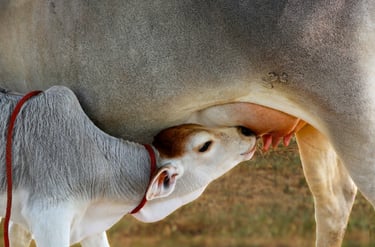
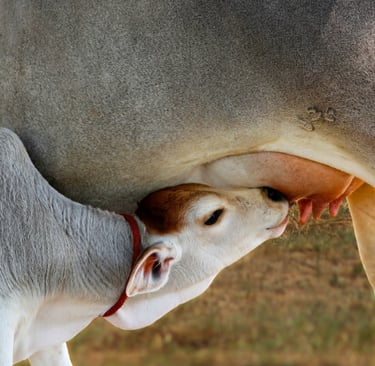
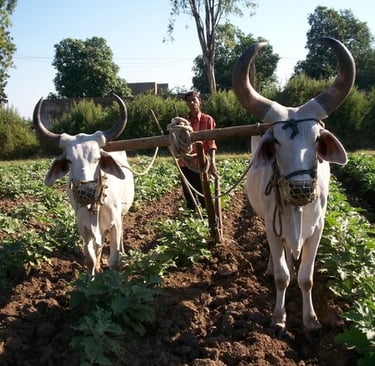
Varnashram is centered around cows, protected cows. Cows are truly protected when the Bull is worked. They become happy when they are protected for life. We protect cows because they protect us. One of the ways they protect us is by being the buffer zone between us and the harsh influence of Kali Yuga. Our success will greatly depend on the treatment to our cows. Happy cows will produce auspiciousness and abundance, while unhappy cows can simply curse a society. They are the solution to becoming self-sufficient.
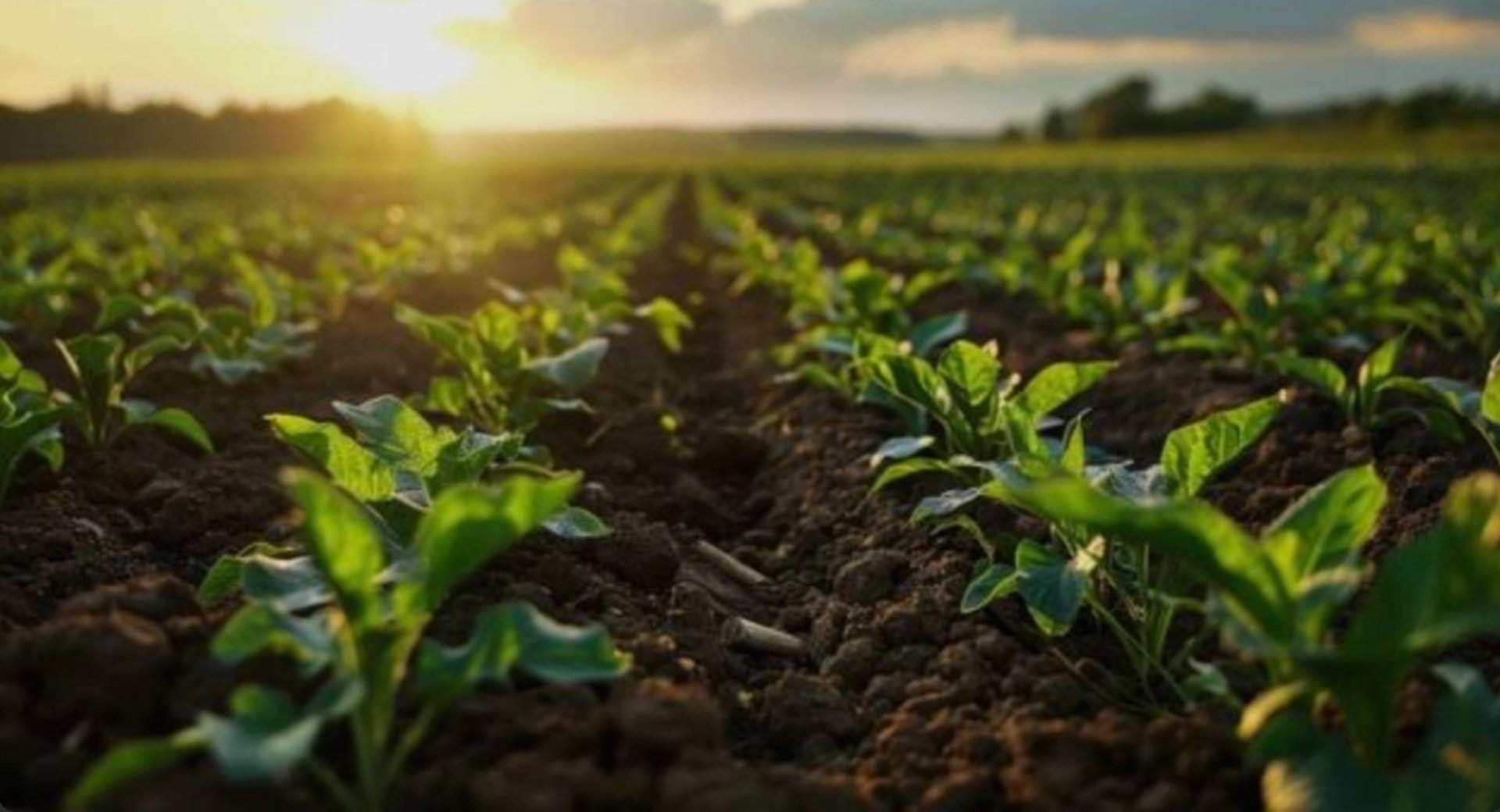
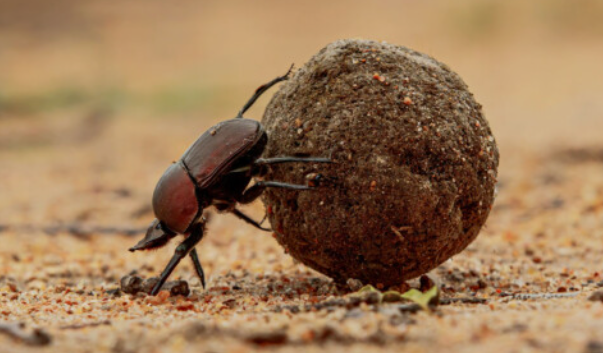
Cows are stimulating the Earth by dunging and urinating in the fields. The dung and urine is massaged into the Earth by their hooves. Then micro turbation takes place, aided by dung beetles and earthworms, producing an ideal fertile soil condition for an abundant yield of nutrient dense pranic crops. The formula is, for every one ton of dung added to one acre of land, you can expect a yield of ten tons of vegetables. Because Laxmi dev resides in the dung, there can be no question of poverty.
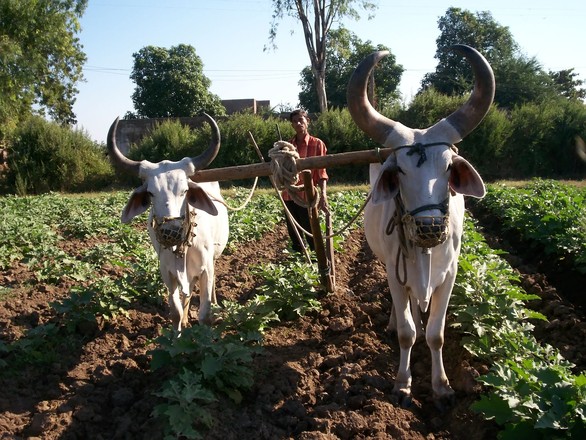
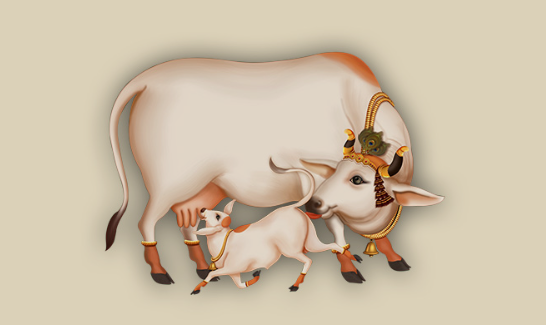
Kamadhenu the wish fulfilling cow
Happy cows are protected cows
About our crops
About our land
- Varnashrama equals cows -
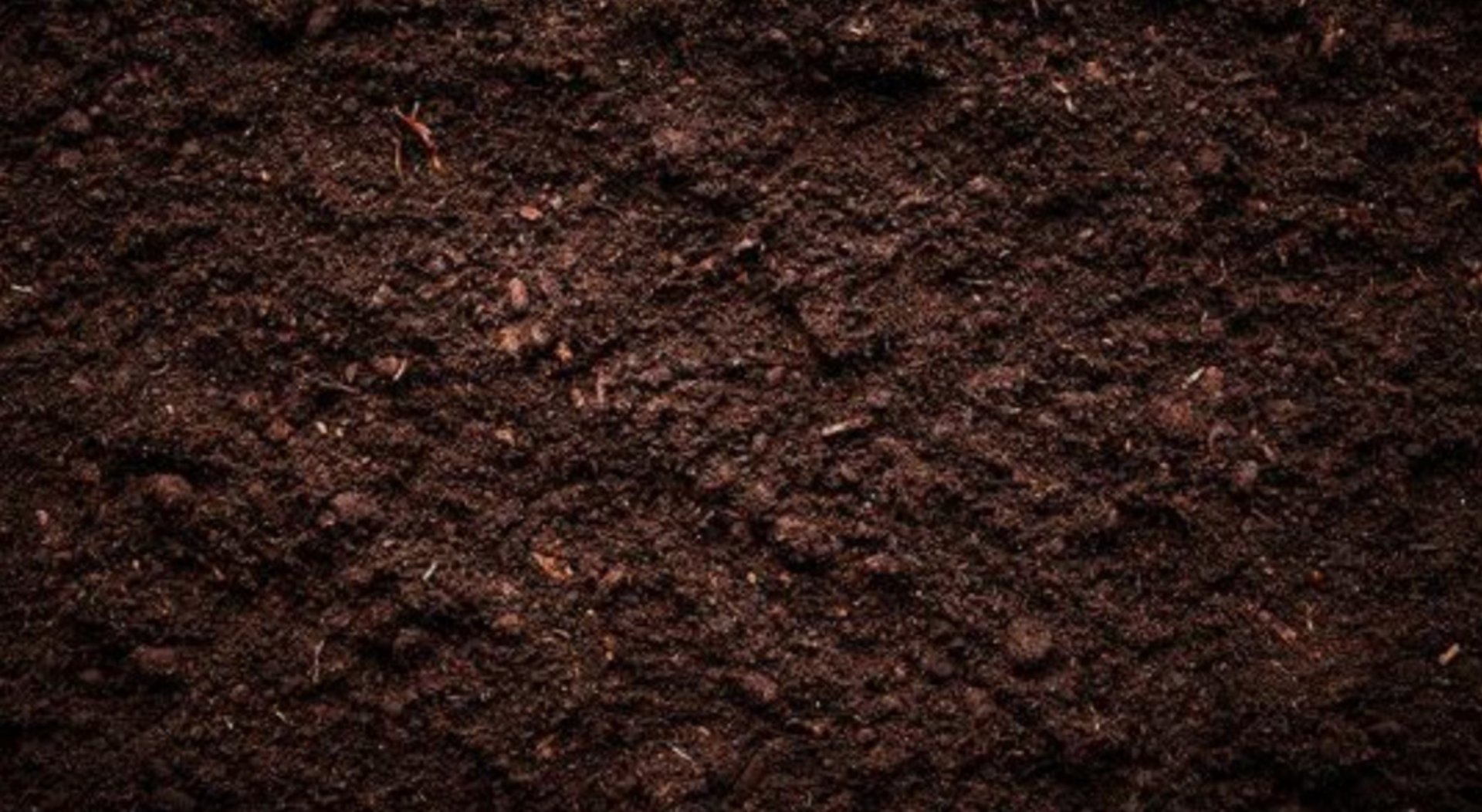
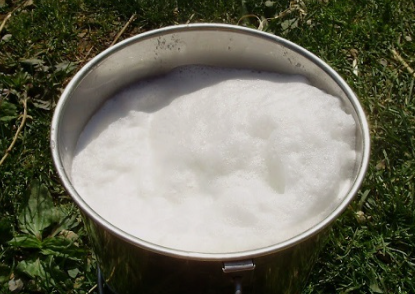
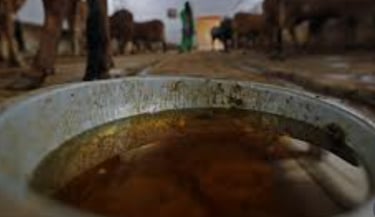
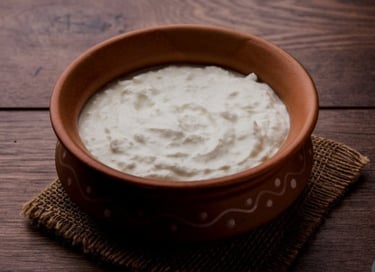
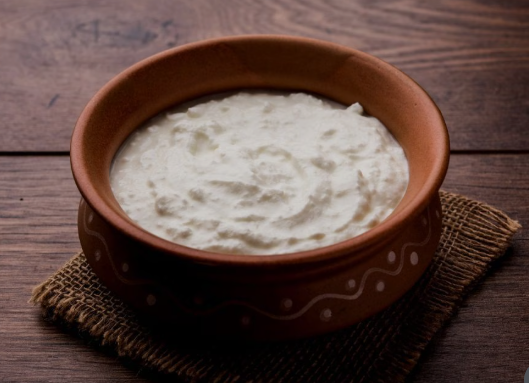
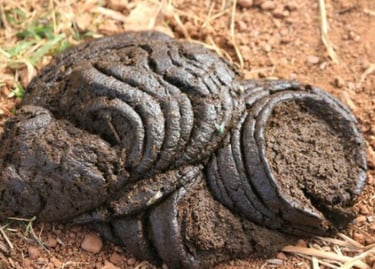
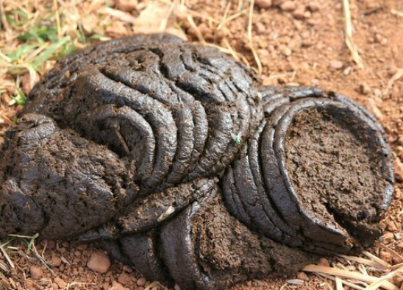
Cow dung (Gomaya): Cow dung is an age-old organic manure, loved by gardeners worldwide for its rich organic matter content. It improves soil structure, enhances its ability to retain moisture, and is packed with essential plant nutrients like nitrogen, phosphorus, and potassium.
Cow urine (Gomutra): While it may seem surprising, cow urine is a veritable treasure chest of nutrients. It’s a source of urea, a natural fertilizer that supplies nitrogen, vital for plant growth. Besides nitrogen, cow urine contains traces of other minerals like phosphorus and potassium.
Cow milk (Godugdha): Cow milk adds calcium to the soil, a vital nutrient for plant growth and development. It aids in plant cell growth, strengthens plant tissues, and helps in neutralizing soil acidity. Additionally, milk sugars can feed beneficial bacteria and fungi in the soil, contributing to a healthier soil biome.
Cow curd (Goghrta): Curd introduces beneficial microorganisms like lactic acid bacteria into the soil. These bacteria contribute to soil health by breaking down organic matter into plant-available nutrients and suppressing harmful pathogen populations.
Cow ghee (Goghrita): Ghee, clarified butter, is believed to stimulate microbial activity, contributing to a rich and thriving soil ecosystem. Although the impact of ghee is less directly related to plant nutrition, it plays a part in enhancing the overall vitality of the soil.
Vedic plant nutrients
Panchagavya
These ingredients, on their own, already bring significant nutritional value to our gardens. But when combined in Panchagavya, they offer an unmatched organic concoction to supercharge your plants’ growth.


CONTACT US
Bali is an amazing place to find a relief from everyday stress. Beautiful resorts, amazing beaches and a special attention to the practice of mindfulness. Contact us so we can help you organize a memorable stay at one of the most magical places on the planet.